
It’s time to take the ego out with the trash…
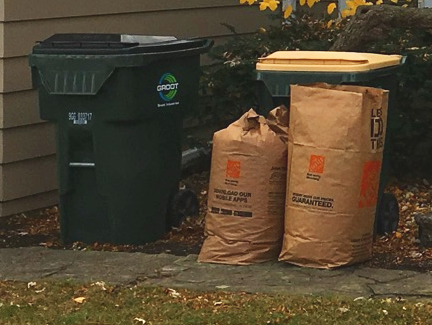
The ego means well, but someone needs to pull the ego aside and give it the bad news. It may have served some kind of purpose for centuries (did it though?), but now it has fully overstayed its welcome. It’s time to kick it to the curb. Go on. Get out of her. I said scram!
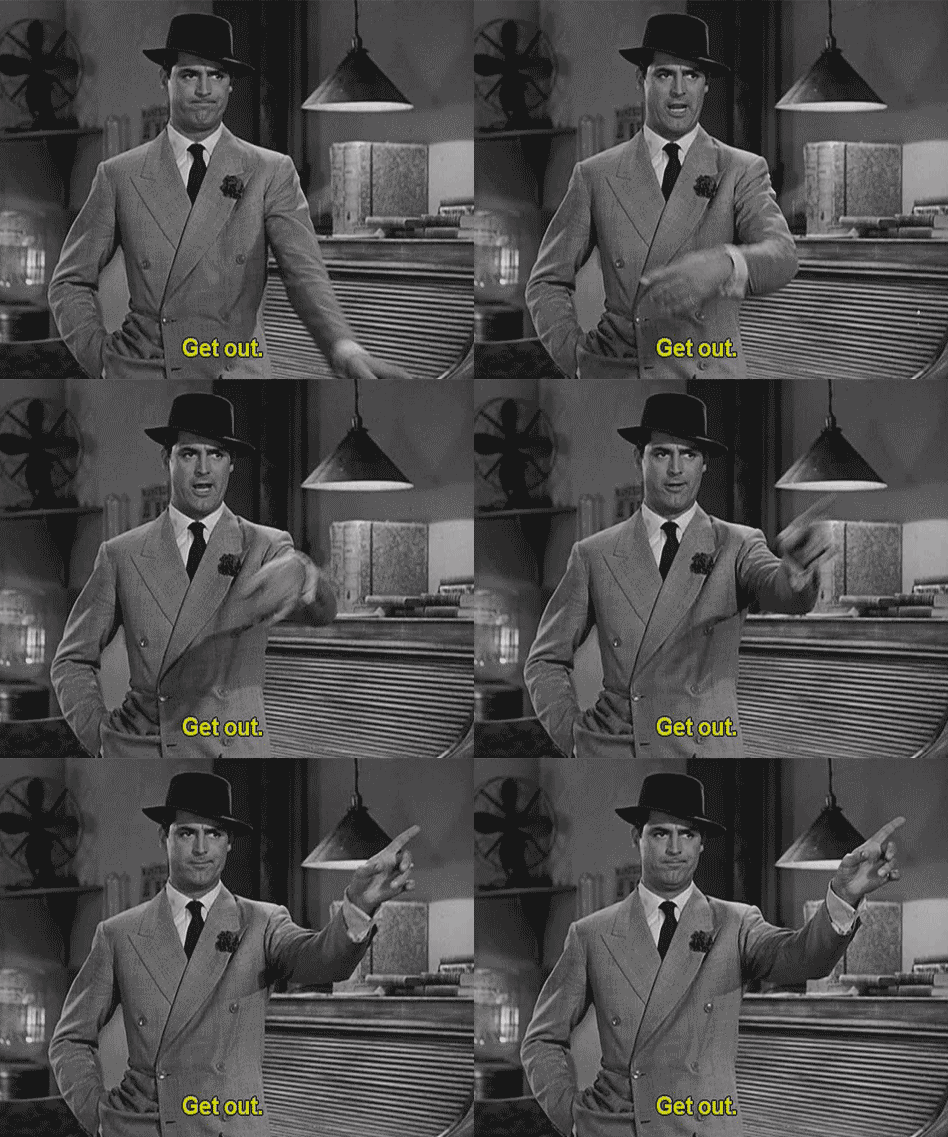
I have been battling my ego for some time now. Perhaps the term “battle” sets the wrong tone. It might work better to have some empathy for my ego, before I kindly hold its head down in a shallow puddle. Er, I mean, let go.
Mistakes offer a prime opportunity to practice letting go of the ego. From the instant I make a mistake, my ego stands ready to spring forward and take over the conversation. It has honed all sorts of techniques to respond in these moments to avoid any acknowledgement of wrong-doing.
It feels like it shows up without warning, interrupting life like cutting in the middle of a crucial dramatic plot twist on Hulu with an unwanted personal injury lawyer commercial:
“Have you made a mistake? I can help you to:
Cover your trail
Blame someone else
Blame the situation
Pretend it doesn’t matter at all. After all it’s no big deal. So, can we just drop it already?
Act now and I can make sure you get to be right, even if you are not!”
Last month, I made a mistake by choosing to turn at the wrong light. In my defense (see how easily that ego steps into action?), Apple Maps will sometimes add lights as you get closer to a street, setting you up to turn at the light, right at the moment you see you should wait for the next light.

I had no way to get back into traffic, so I figured I could just turn around in the parking lot, but I immediately faced a parking gate entrance not really designed to accommodate three-point turns.
I’m an optimistic fellow, so I forge ahead with my three-point turn plans, and of course, here comes Mr. Annoyed Parking Dude.
“What are you doing? Did you not see the sign that said no U-Turns?”
Obviously I did not see it, because I was preparing to make a u-turn.
“No, I didn’t see it.”
His look tells me that he doesn’t believe me. And even he did, he doesn’t care. And why should he?
I’m sure many other humans of all ages tried the same thing since he started working in that parking lot. Many of them thought they could get away with it, too. When the parking dude confronted with them, they acted dumb. They pretended not to see it. They may have even berated the attendant for the accusation, no matter how accurate. The ruthless ego in action.
In my case, I wasn’t pretending. Instead, for my ego, it was important to me that he knew I wasn’t pretending. That he knew I wasn’t one of those guys who pretend because they were caught disobeying.
I attempted to prove my point by saying “I’m not from around here, so how could I know?”
Another dumb excuse. It’s on me to read the signs. Also, this excuse doesn’t even work, because this five mile radius of hotels and resorts notoriously consists of 95% tourists “not from around here.”
I drove back to my hotel, sans ice cream, playing through the exchange in my head. I so badly wanted him to know it was just an honest mistake. I didn’t want this person, who I would absolutely never see again, to think of me as that kind of person.
As I tossed and turned that night, replaying the series of events, I had to admit that I could have avoided the whole affair by simply taking the ticket and exited the parking lot on the other side, which by the way, cost me nothing, except a bruised ego.
It was time to move on.
Instead, I spent the next several therapy sessions belaboring the event, until I could understand the concept of “yielding to someone’s influence.”
This idea took me some time to grasp, because it requires that you consider the other person’s perspective, even if... and this is the key... even if you know they are wrong.
In this case, I could see that this parking dude probably faced clones of me all night long trying to make impossible U-Turns. It was easy to understand how he might see the situation, mostly because of all the ways I had to admit I was actually wrong.
But, I had trouble wrapping my brain around this approach in situations where I knew I was right, because it seemed to suggest letting a wrong person win. Crazy, right?
The key element that makes this work is not about right versus wrong, but understanding.
Understanding another person’s perspective and how they may have gotten to that perspective requires empathy, and I profess myself as a champion of empathy, and somehow I had been spending my life ignoring empathy because of my ego’s endless hunger for winner-take-all fight-to-the-death conflicts over u-turns.
Soon after, I would face an opportunity to practice with someone I know very well. Someone I couldn’t just avoid by making an illegal u-turn. Someone whom I chose to marry 28 years prior to the incident.
The situation began to unfold when my chow chows Basie and Steffi changed their patterns in a surprising way. For 8 years, they have practiced a very strict polite co-existence. Each preferred certain positions in the house, with Basie moving from the hearth to the front entry way, and Steffi splitting her time between the side window and the hallway runner carpet.
They tolerated each other, passing each other occasionally with an indifferent glance, like coworkers from distant departments exchanging nods at the water station. They only made one exception to this polite acknowledgement of existence.
For about 37 seconds a day, they play fight, which works out to about 4 seconds of jousting, and 33 seconds of staring contest. Once back inside, they return to staying out of each others way like an old married couple.
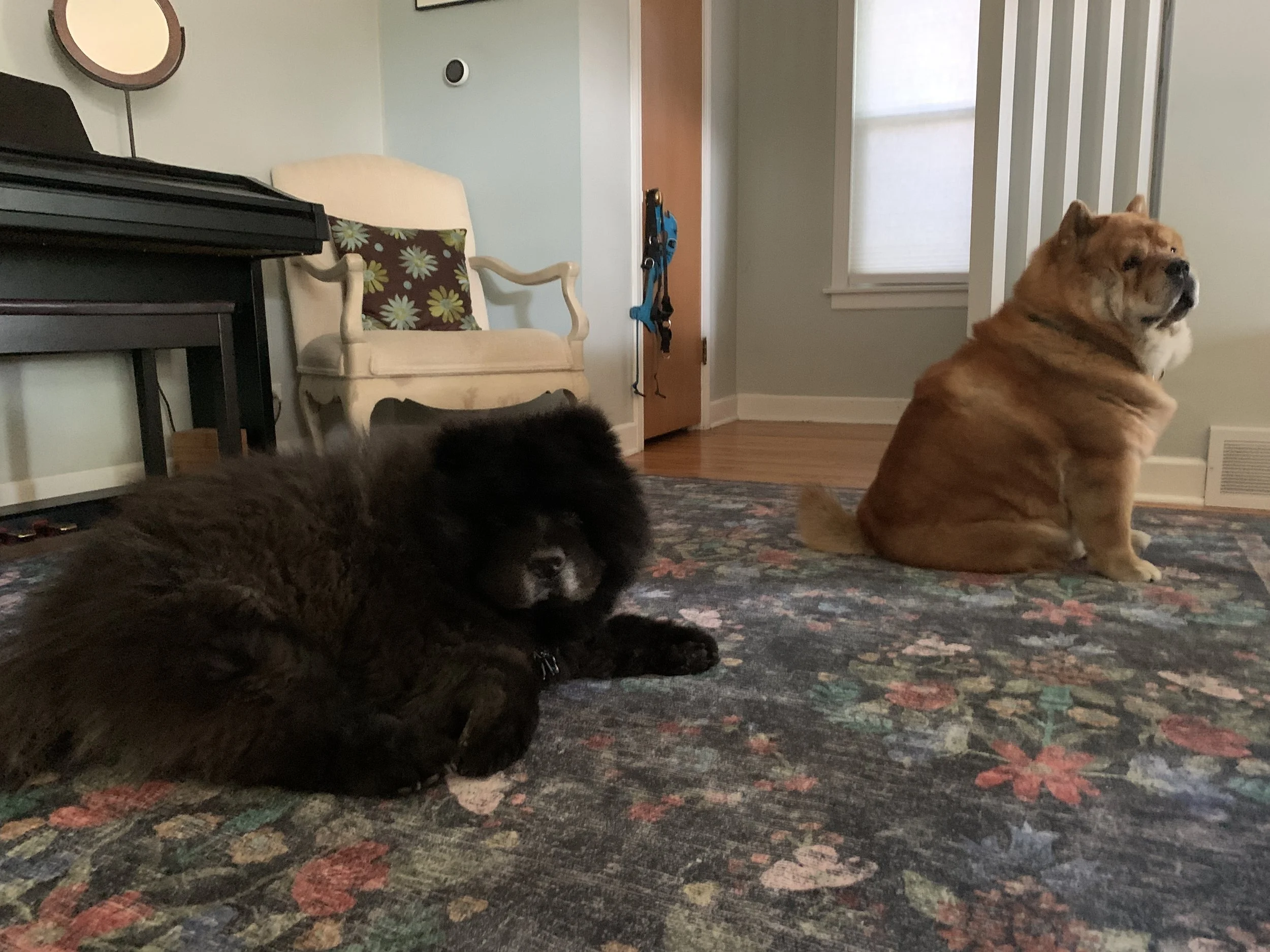
Until last month. Steffi began a systematic pattern of behavior that involved kicking Basie out of his spots. She would nudge him to give him the old heave-ho, and then take his exact spot. Then, one minute later, after he took a new spot, she would saunter over again to claim his new spot.
Basie never complained, a very happy-go-lucky fellow, but my wife found this new behavior appalling. How dare Steffi keep shuffling Basie around the room!
We debated the proper solution. My wife insisted we must separate them immediately, but I wanted to give it time. After all, they have always worked it out in the past amongst themselves.
We quickly hunkered down in our opposing positions, each insisting we knew better, until we finally admitted that we technically did not know better, as we had no actual expertise in dog behavior, and the dogs up to this point still have not figured out how to use their words.
At this point, in an even more interesting twist, over the course of the conversation, I started to understand her thinking on it, and something shifted at that point. Understanding didn’t mean throwing in the towel and simply going along to keep the peace.
Understanding took away the very need for right and wrong. Before I knew it, I had already yielded to her influence
We separated the dogs, and surprise-surprise, everything worked out. Meanwhile, my ego sits with his arms crossed, all pouty and whiny. Poor baby. He really doesn’t know how to grow up.
Now that the Christmas season is upon us, all this talk of ego makes me think about it more in the grand scheme. It makes me wonder, how is the ego working out for us as humans? Does it even serve a purpose any more? Imagine a world filled with empathy and understanding -- grace and generosity.
People often wish we could have Christmas all year long. Putting aside the obvious Mariah-Carey-induced exhaustion, it seems like most everyone would benefit from a regular dose of holiday comfort and joy.
Instead, it seems like we only manage to find empathy and kindness during Christmas, and then ego returns in January as the reason for the off-season.
In truth, we only have each other during the other 11 months of the year. Finding empathy for loved ones and strangers alike in a complex world would go a long way to make those u-turn conflicts into friendly whoopsies, and might even give our collective dogs some space to do their own letting go.
So, I urge you to have a serious sit-down talk with your ego. Make it clear it’s preventing us from enjoying Christmas all year long. Point out all the emotional wreckage it has wreaked, and say, “this is why we can’t have nice things!”
Go ahead. Blame the ego. Then bury it in the crawl space.
Er, I mean, let go.